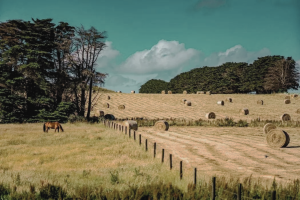
Across the vast North American continent, the unique appeal of Canada’s agricultural economy is drawing attention from global investors. As the second-largest country in the world by land area, Canada possesses 9% of the planet’s arable land and freshwater resources, yet less than 2% of its labor force is engaged in agricultural production. This imbalance between abundant resources and a limited agricultural workforce creates a natural value opportunity for farm investors.As the thresholds for skilled immigration continue to rise and traditional investment immigration pathways gradually narrow, the Farm Owner Immigration Program—jointly introduced by the Canadian federal government and its provinces—has emerged as a pragmatic and forward-looking immigration option.

Unlike conventional business immigration programs that demand substantial net worth, Canada’s farm investment immigration offers remarkable flexibility. In the Prairie Provinces—Alberta, Saskatchewan, and Manitoba—investors can acquire full ownership of a medium-sized family farm starting from CAD $500,000. In the Atlantic Provinces, such as Nova Scotia and New Brunswick, entry-level programs provide small-scale trial farms for as little as CAD $200,000, accompanied by ongoing support from government agricultural advisors.One of the most innovative initiatives is Ontario’s “New Farmer Development Program,” which allows investors without prior agricultural experience to lease land with an option to purchase. During the three-year incubation period, participants gradually transition to full ownership, significantly reducing initial investment risks.
The core value of this program lies in its deep integration of farmland capital appreciation with immigration status acquisition. According to the Canadian Federation of Agriculture (CFA), high-quality farmland in Canada has appreciated at an average annual rate of 8.4% over the past decade. Certain niche sectors, such as specialty orchards in Ontario and organic farms in British Columbia, have achieved compound returns exceeding 15%. Once investors meet the basic requirements set by Immigration, Refugees and Citizenship Canada (IRCC)—including annual farm revenues of at least CAD $250,000 and the creation of at least one full-time job—they may qualify for expedited permanent residency through the Provincial Nominee Program (PNP). Quebec further enhances accessibility by offering preferential policies for French-speaking applicants, including exemptions from some business performance criteria after completing basic French language training.
The program’s long-term viability is supported by a comprehensive framework of public and institutional backing. Farm Credit Canada (FCC) provides financing solutions with loan-to-value (LTV) ratios of up to 75% for new immigrants,
The effectiveness of this immigration model has become increasingly evident in recent years. One notable case is that of Mr. Wang, an investor from China, who purchased a 600-acre grain farm in Manitoba in 2019. Leveraging domestic e-commerce platforms, he established a direct-to-consumer sales system that led to a 300% increase in revenue over three years. His entire family obtained permanent residency, and he was awarded the “Export Contribution Award” by the provincial Ministry of Agriculture. In another example, a Vietnamese immigrant family in Ontario launched a vertical farming project using Internet of Things (IoT) technologies for precision cultivation. Their farm became a direct supplier of fresh vegetables to the City of Toronto, creating 12 local jobs.
Naturally, this immigration pathway requires investors to move beyond conventional perceptions. Canadian agriculture is far more than a simple land acquisition—it demands a comprehensive industrial mindset. From selecting crop insurance, participating in agricultural machinery cooperatives, to utilizing carbon credit trading markets, each step tests the investor’s capacity to localize operations. New immigrants entering the sector with a purely industrial approach often undergo a paradigm shift in areas such as soil regeneration cycles and organic certification procedures. This is precisely the deeper intention behind the Canadian government’s design of such immigration programs: to foster a new generation of farm operators who are truly rooted in rural communities through the holistic integration of production factors.
As global concerns over food security continue to intensify, Canada’s farm investment immigration not only provides an innovative pathway to residency planning, but also establishes a strategic foothold within the global agricultural supply chain. This model—integrating personal development with national resource advantages—is reshaping traditional patterns of human migration. For investors who aspire to pursue both a deep connection to land and sustainable wealth creation on the North American continent, steering a combine harvester may offer greater long-term opportunity than riding the unpredictable tides of the financial markets.
News source:https://www.yufengvisa.com/baike/19549.html